In Focus: Thomas Peschak
The National Geographic photographer talks about his journey from the source of the Amazon to the sea and his beautiful book documenting this epic river
You’ve probably seen the image. A great white shark trails a man in a yellow kayak, his head turning slightly to look at the apex predator that’s just several metres away. The photo, taken by Thomas Peschak in South Africa, would go on to become an iconic document of the ocean’s most storied hunter, a photograph that captures both our reverence of these majestic creatures, but also our unease at being in their environment. At the time, people debated whether it was even real (it is) and the photograph was even Photoshopped and used to trick established newsrooms into believing that great whites were swimming through the flooded streets of a post-hurricane Puerto Rico (they weren’t). At this point, Peschak was still officially a scientist moonlighting as a photographer, but this image “put him on the map” in his words. “It's an image that went viral at a time when virality didn't really exist.” The photo was taken in 2003, but over two decades later remains one of the defining images of the great white shark.
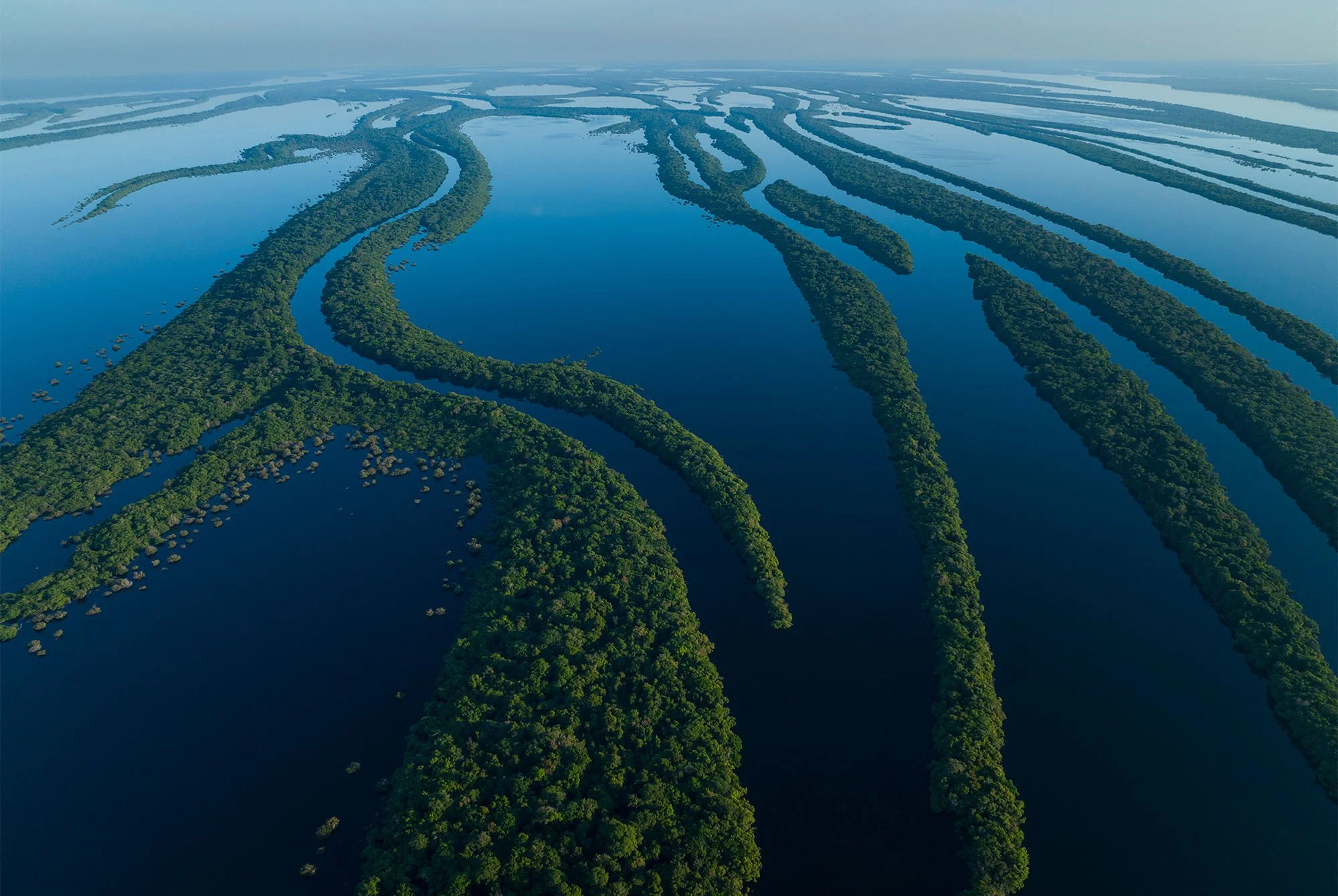
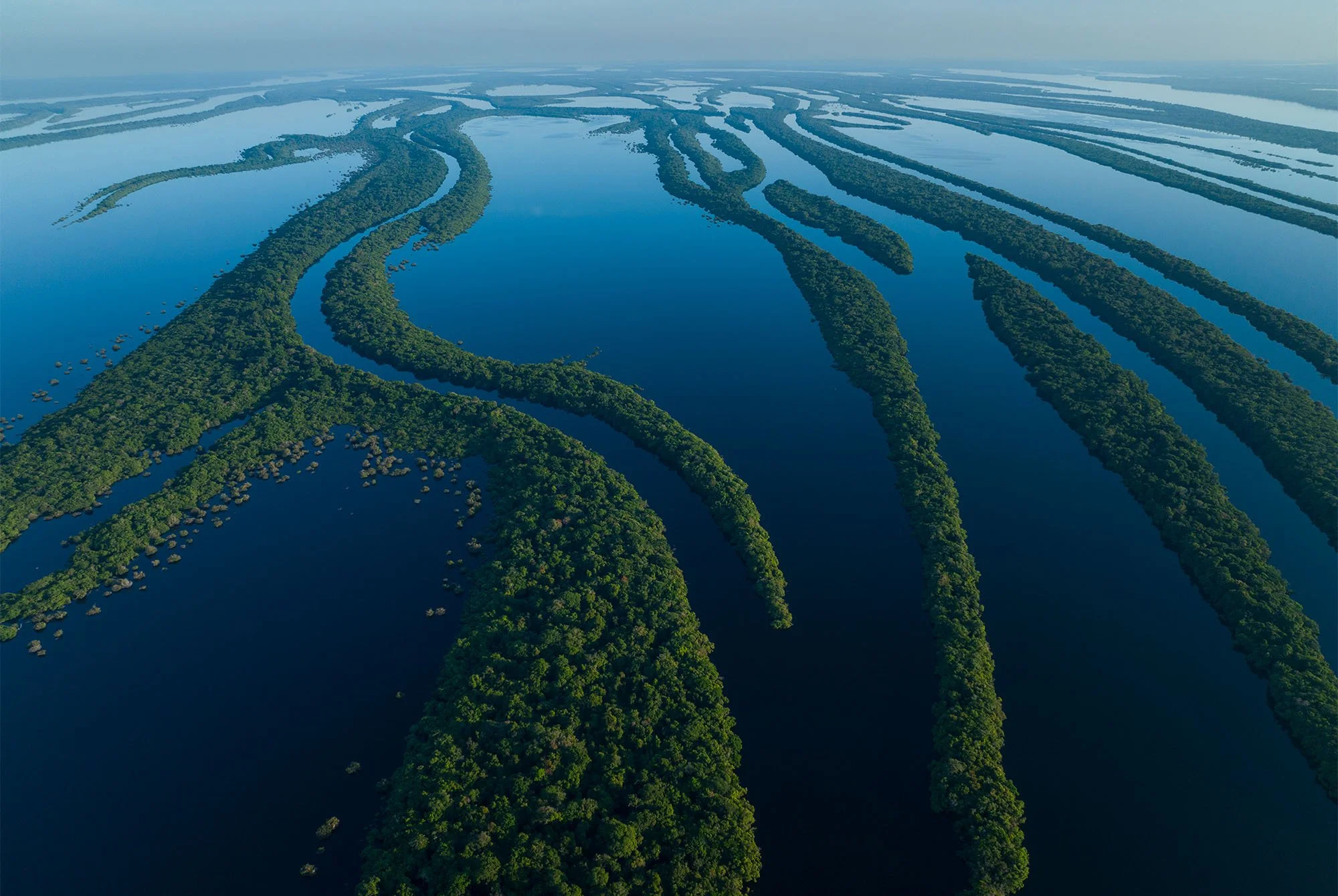
From an early age, Peschak was obsessed with the ocean. This fascination led him to a career in marine biology, but a struggle with getting people to connect emotionally with data inspired him to start taking photos, initially just to support his own scientific research. Around 2005, he made the decision to pivot to photography and became a National Geographic explorer, one that has as of today produced 23 stories for the magazine, travelling from the Galápagos islands to the Kalahari Desert. His new book Amazon: A River's Journey From the Andes to the Atlantic, sees Peschak move out of his comfort zone in the ocean and up to high altitude. “I had to figure out how to survive in a tropical rainforest,” he says. “A lot of these situations were completely alien and foreign to me.” The book is a winding journey that took over a year, tracing the source to the sea. Along the way, he embeds himself with Indigenous communities who live alongside the river, learns about the grave dangers that the rainforest faces and spends time underwater in the Amazon.
“I find that you don’t necessarily continue to create the most groundbreaking work if you’re too comfortable and confident.”
Thomas Peschak
Q & A
Let’s start with your training as a marine biologist. I know that you were ten at the time when you told your parents, "I'm going to be an ocean explorer." At that early age, where did that fascination with the oceans begin and where did that drive come from?
I was always into fish identification books and anything Jacques Cousteau, it was just something that I just instinctually gravitated towards. It's not like my parents were big ocean explorers, I grew up in a fairly normal inland household but they did take me to the beach on a regular basis. Watching Jacques Cousteau and leafing through copies of National Geographic at that young age, there was just this instant connection with the ocean, this thought of "Yeah, this is my thing. This is what I want to do for the rest of my life." Which is both a blessing and a curse, I think, in so many ways. Knowing what you want to do from a very young age obviously allows you to throw everything you have at it. On the other hand, it can become a very intense, passion-filled and demanding life. I wanted to be the marine biologists in these documentaries and articles. I wanted to study sharks, corals, seahorses and whales. That was the driver for a very, very long time, at least until I was two or three years into my PhD and I realized that as much as I love science, 99% of the rest of the world didn't really respond to it with too much enthusiasm or energy.
Most of us were trained in talking and writing about these things in such a complex, complicated and jargon-heavy way that it just simply couldn't be understood by the general public. That frustrated me because the work I was doing back then, starting in 1999, was studying the impacts of poaching on kelp forests. The data I was collecting showed the scale of the environmental impact and the data, while compelling, simply wasn't moving any needles. It wasn't shifting any of the decision makers and it certainly wasn't rallying the public around the issue. At the same time, I was also taking photographs underwater, not to publish in National Geographic, but to use in my scientific papers and in my presentations. The response was compelling and unexpected. With just a few photographs, I was able to achieve things in conservation that had eluded me in science for years. That’s how my career in photography started. Eventually I decided to pivot away from frontline scientific research to photography and storytelling. It was probably around 2005 or 2006, and now 20 years later, I haven't looked back. However, science still underpins everything I do as a storyteller.
While researching for this conversation I found out that that photo of the great white tracking the yellow kayak was you. That image has been everywhere!
That was shot in 2003 on slide film, shot when I was still officially a scientist, but moonlighting as a photographer. I was working on a book about great white sharks and spent a year and a half with that species. That image put me on the map and really opened doors for me. It's an image that went viral at a time when virality didn't really exist, so it was an interesting experience.
Your new National Geographic book Amazon: A River's Journey from the Andes to the Atlantic is out now. You acknowledge in the intro being a novice in a rainforest compared to the oceans. So what drove you there?
I've spent around 20 years primarily telling ocean-centric stories. I'm still in love with the marine realm, don't get me wrong, but a few years ago, things became a little bit pedestrian. It became a little bit too easy and everything felt just too comfortable. I felt like I was repeating myself – there's only so many ways to photograph a manta ray, a shark and a gray whale at the end of the day. I find that you don't necessarily continue to create the most groundbreaking work if you're too comfortable and confident.
About ten years earlier, I’d had this idea to do an underwater story in the Amazon. But at the time, I was so embedded in the marine realm that there was just no way that I was going to leave the ocean for a rainforest river. Eventually though, around 2019 or so, I came across a scientific paper that was talking about the impacts of dams in the Amazon River Basin. At that stage they had already built more than 400 dams and I think another 400+ were scheduled to be built in the coming years. Even as a marine biologist I knew that dams at that sort of scale would be an incredible disruptor and would have negative impacts on biodiversity. After some more research I quickly realized that climate change, overfishing, plastic pollution – all the things that I'd been combating with my storytelling in the oceans – also all exist right across the Amazon River watershed. That river ecosystem and its biodiversity is as, if not more, endangered than any of the marine systems I've worked on in the last 20 years. That was a real rallying call where I thought, look, if you're ever going to do this Amazon thing, it's now or never.
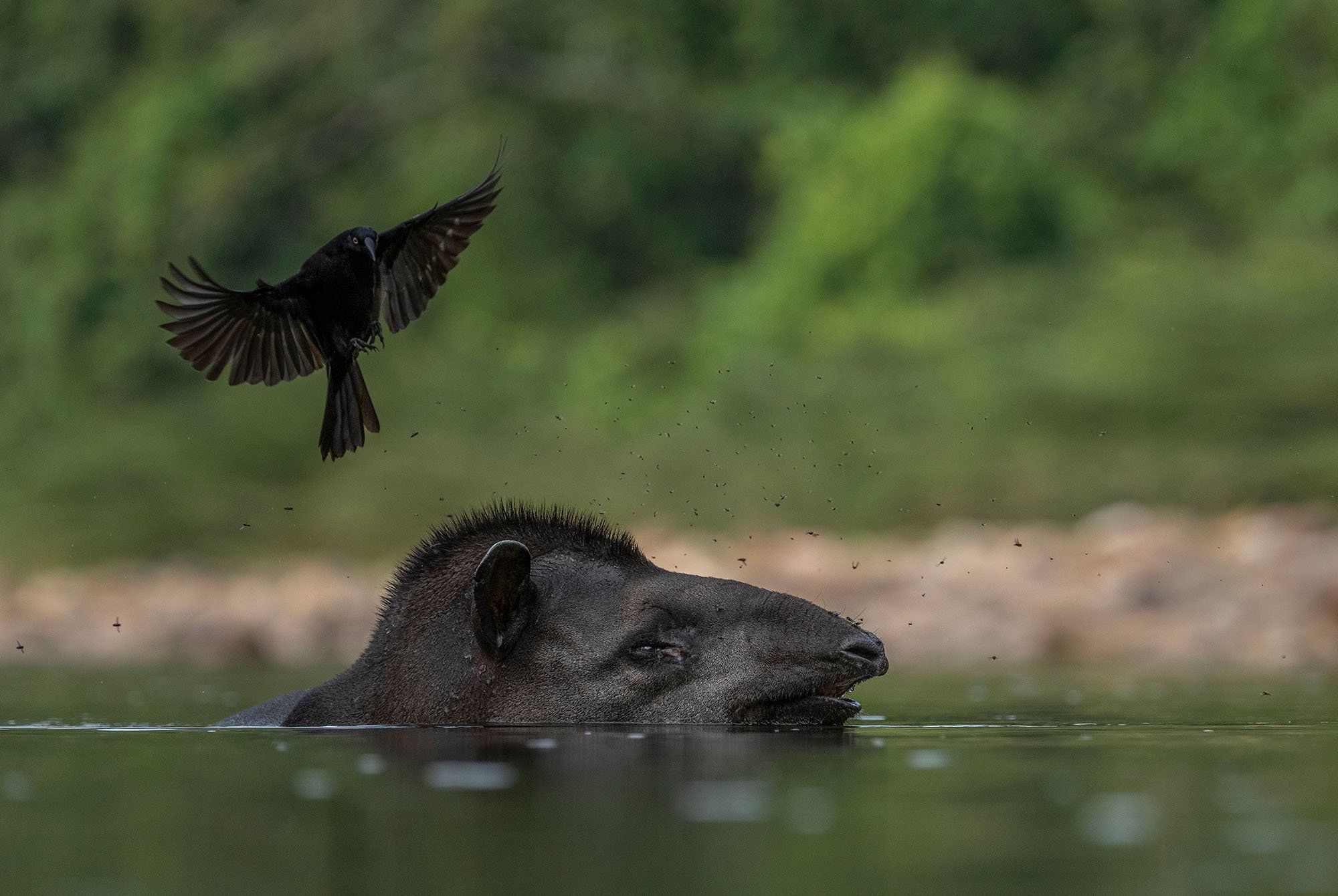
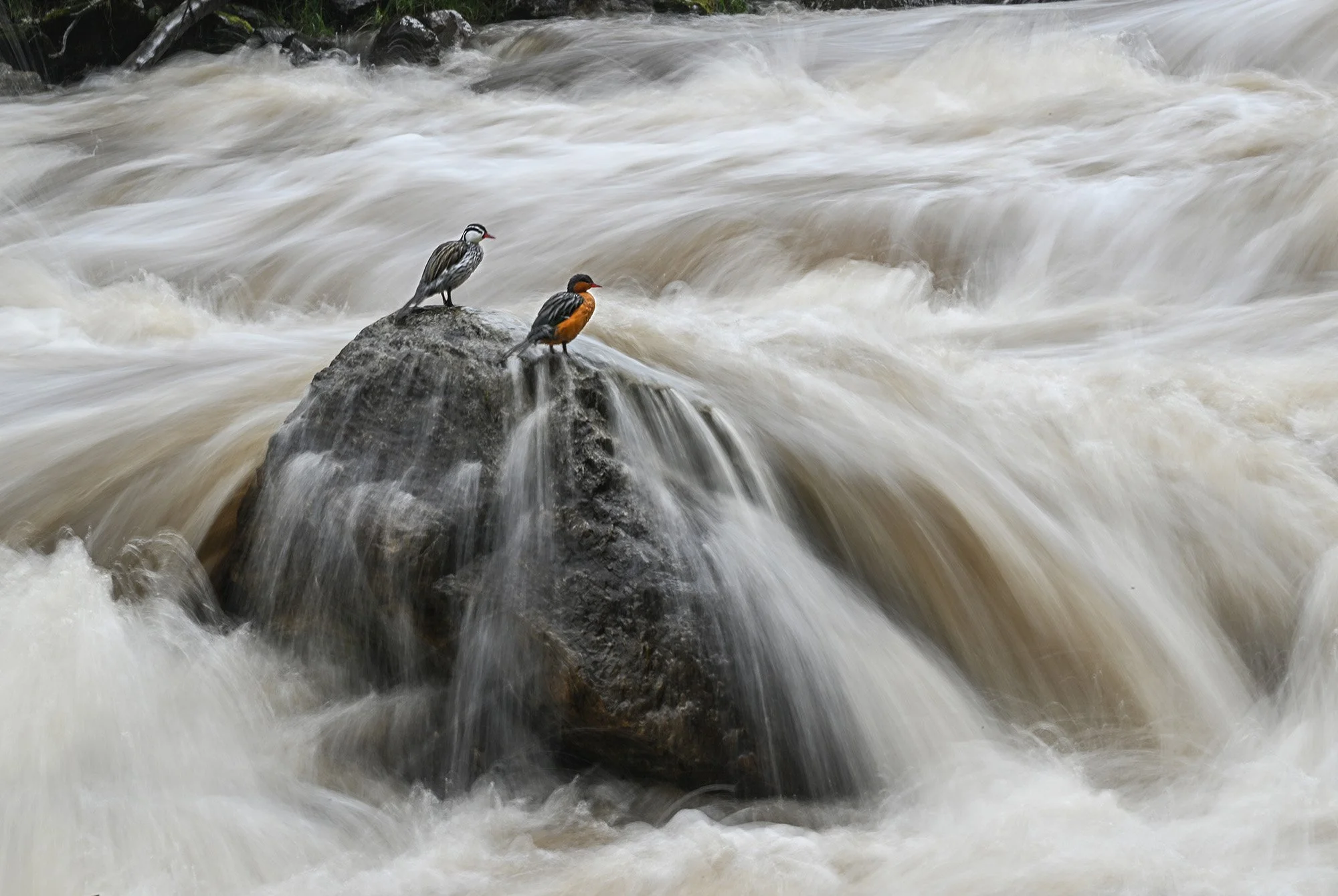
“The trickiest part for me was that there was basically no underwater intel. Hardly a soul has ever explored underwater across most of the Amazon basin.”
Thomas Peschak
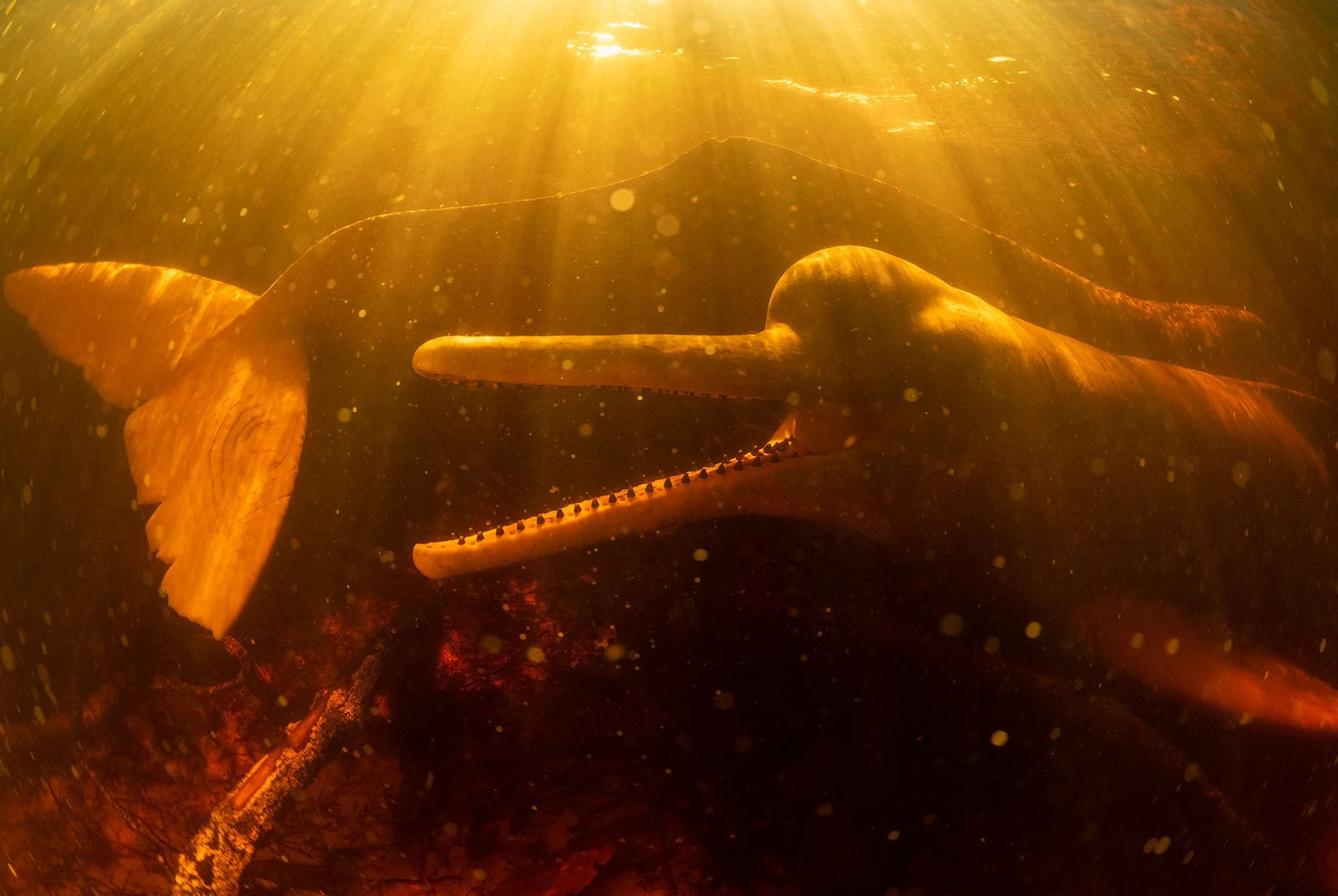
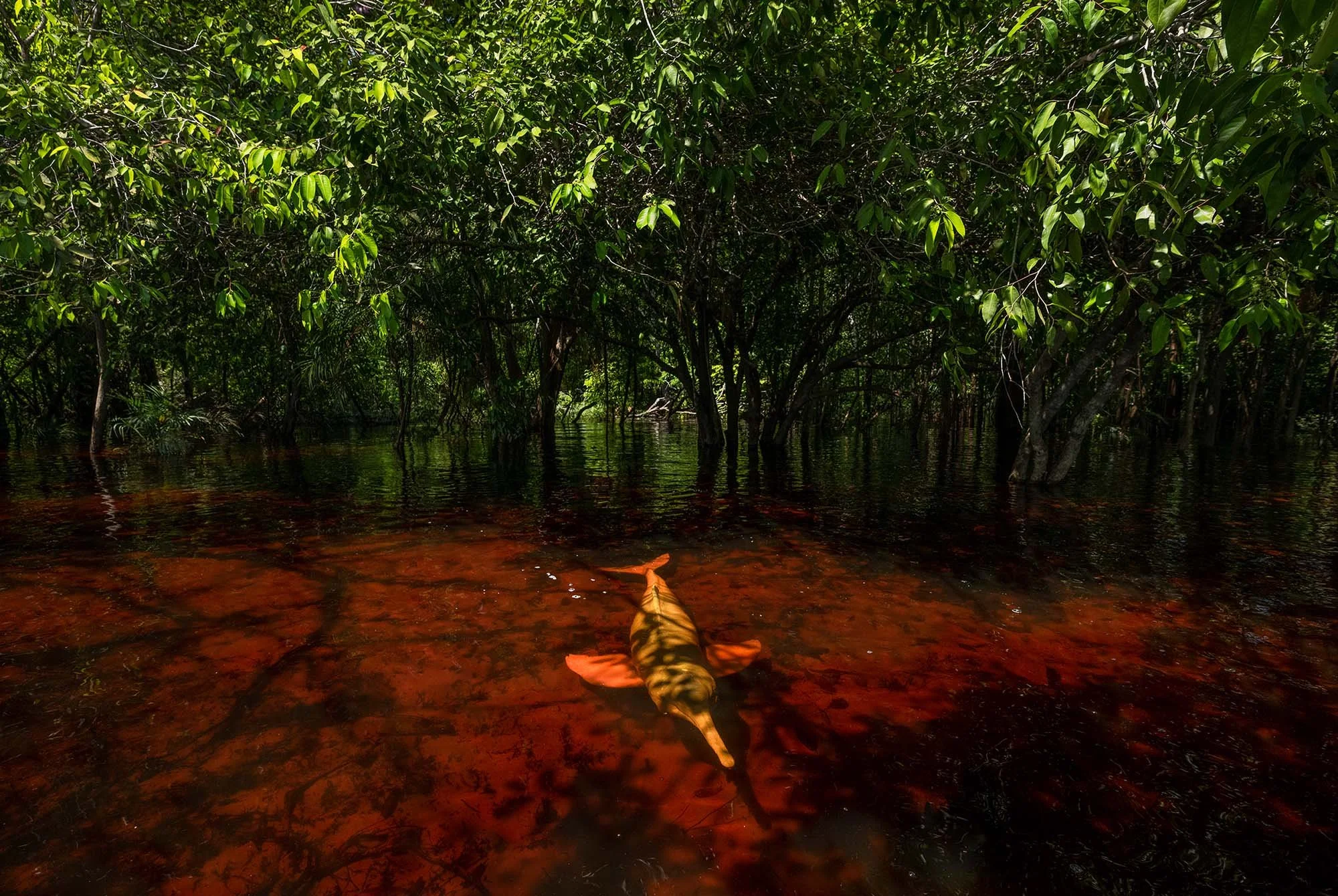
The footage of you swimming up close with those pink river dolphins is unbelievable, how close you are in such murky water. It's unusual footage to me because obviously we’re used to seeing people interacting with a dolphin in the open, very blue expansive ocean. How did that experience feel?
First off I am not a rainforest expert or a high altitude mountaineer. Nonetheless, I had to operate and be creative at 6,000 meters near one of the Amazon River’s sources at minus 20 degrees with ice axes, crampons and only half the oxygen that's available at sea level. I also had to figure out how to survive in a tropical rainforest and a lot of these situations were completely alien and foreign to me. At the beginning the only time I felt comfortable was when I got underwater in the rivers. There I felt instantly at home, everything felt much more familiar, as there are lots of marine parallels. There's dolphins in the oceans, there's dolphins in the Amazon. There are manatees in the Amazon, there are manatees in the ocean. Many coral reef fish have lookalikes there too.
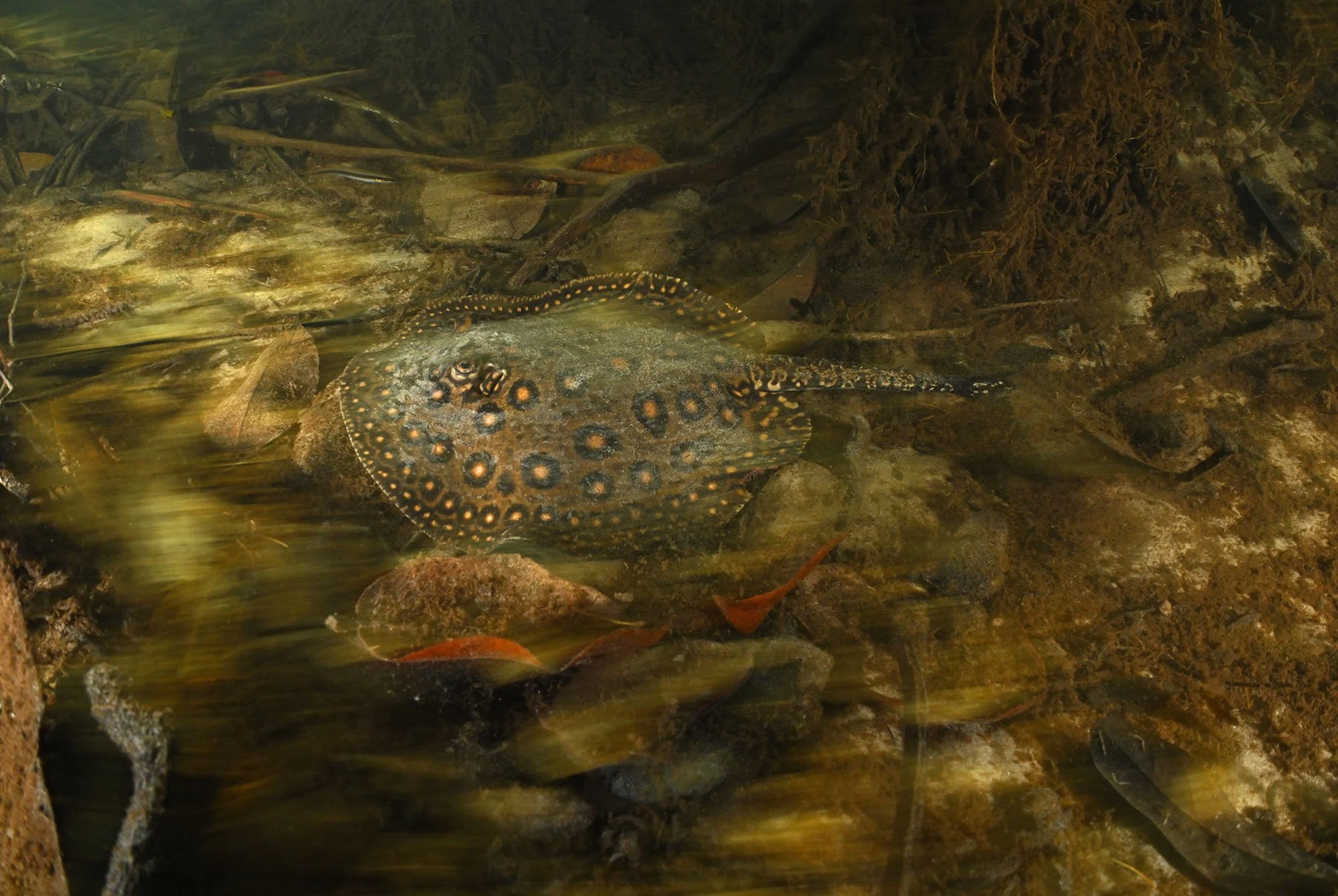
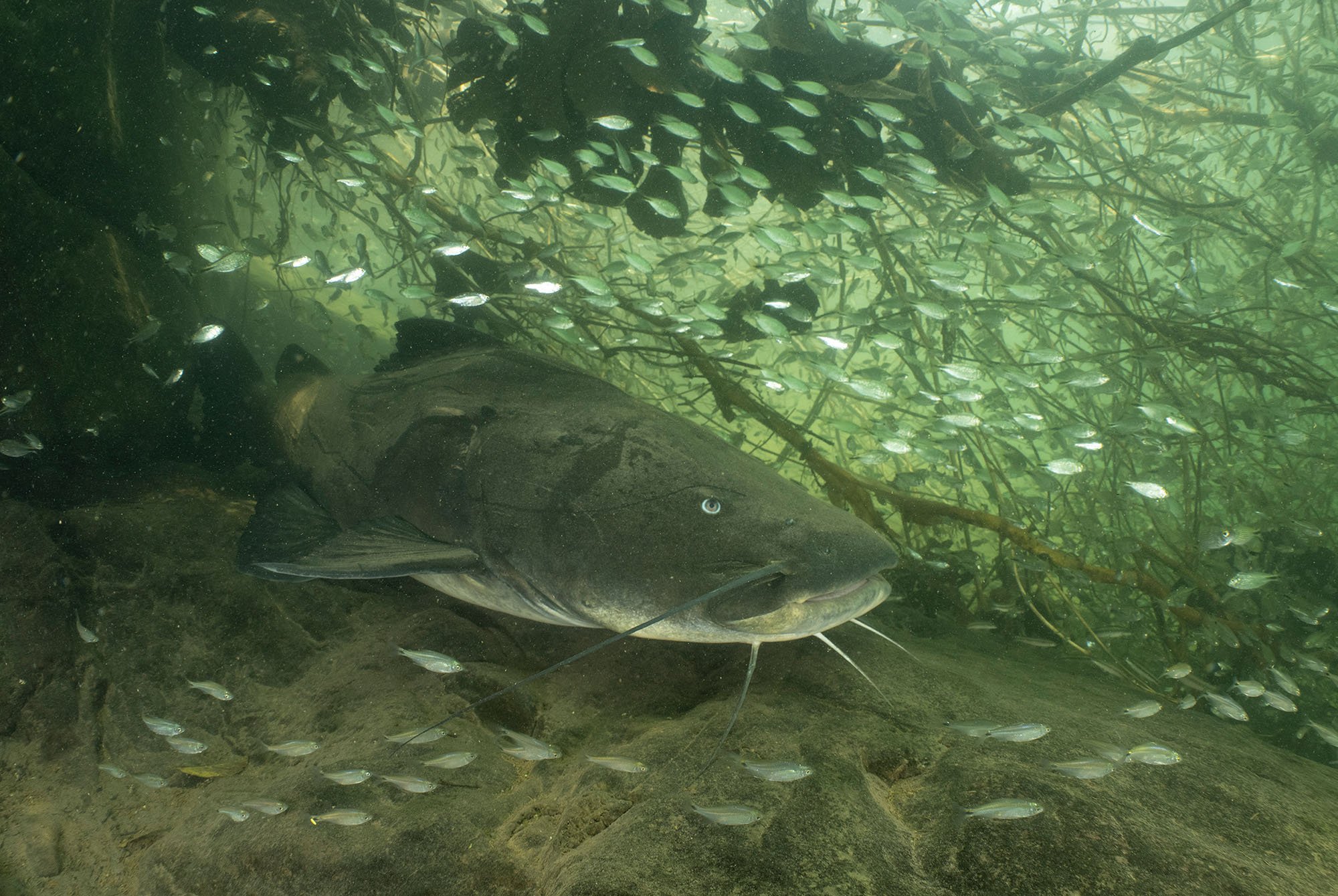
The trickiest part for me was that there was basically no underwater intel. Hardly a soul has ever explored underwater across most of the Amazon basin. So you speak to the scientists who have studied these fish there for 30 years, but they've never seen them underwater alive. The Indigenous people are incredibly knowledgeable and collectively hold as much, if not more, knowledge than all the scientists combined. However, they too don't really go underwater all that much, and certainly not for this purpose, so I was having to figure it all out on my own. That was pretty demanding and full on - I’d say that 99.9% of the aquatic underworlds of the Amazon River watershed were unexplored.
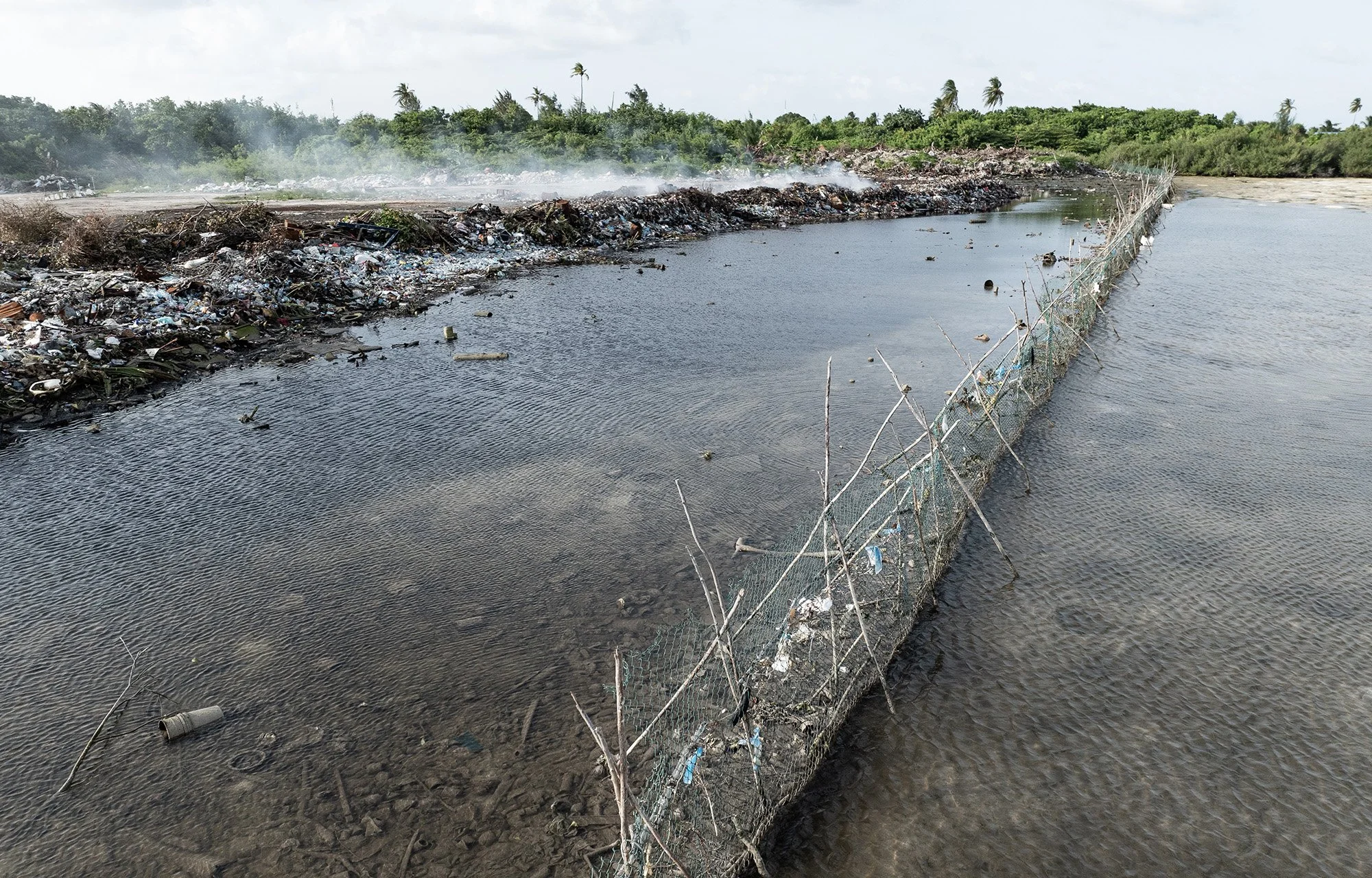
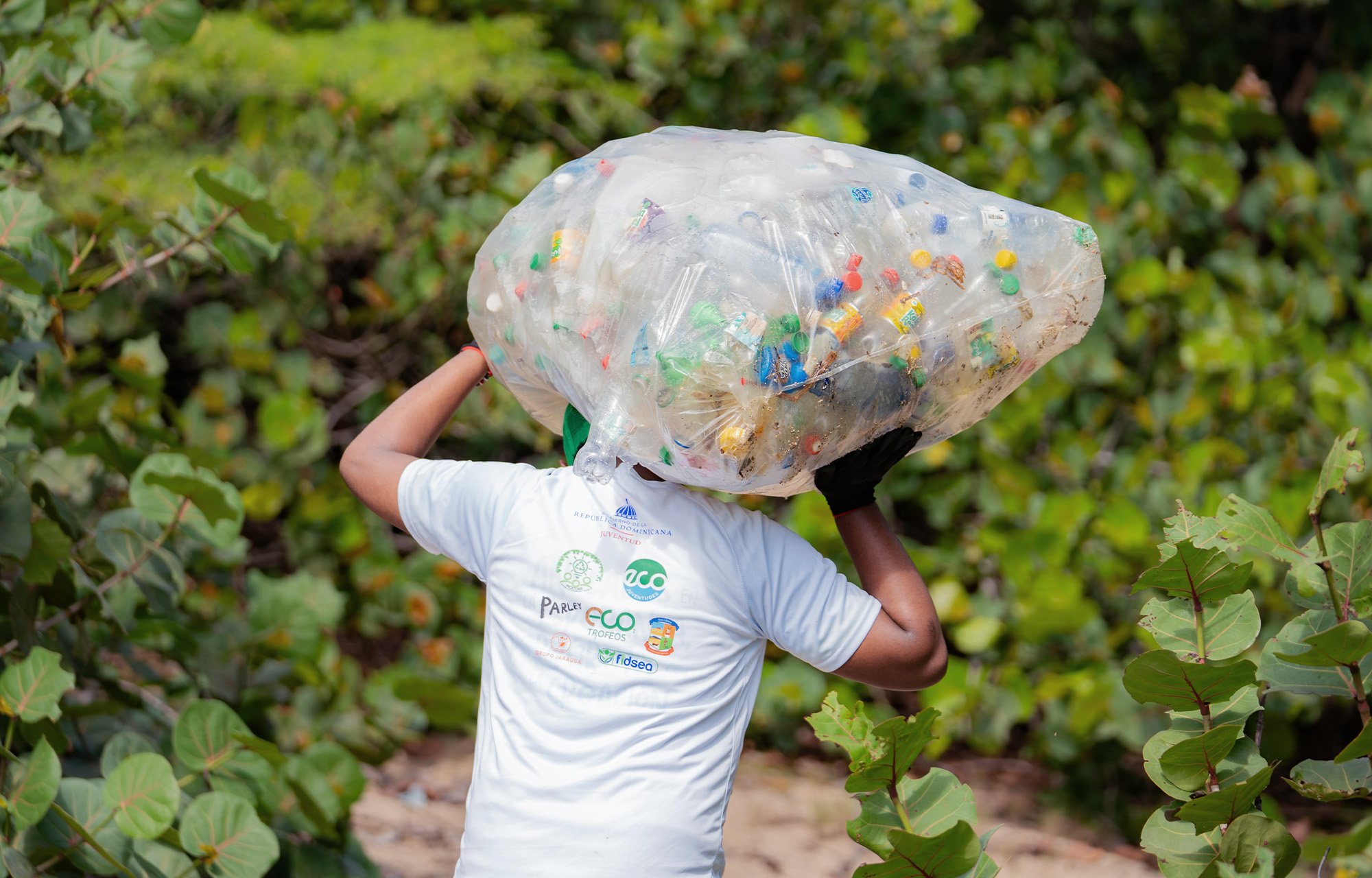
In the book you mention that plastic pollution is an issue. That's something we focus on intensively at Parley – the impact of this trash turning up in places in the world where maybe humans never even go. How visible was that issue on your expedition?
It is visible around the urban centers, places like Manaus can be visually fairly horrific when it comes to plastics. That's the obvious, big macroplastic waste. We know now that the unseen microplastics carry equal, if not more, impact. However, when it comes to plastic pollution, is that the biggest issue in the Amazon right now? I don't think so, in all honesty. It’s an important issue, but minor compared to others. One of the years I was there, was one of the driest in decades and decades. Rivers became unnavigable and large numbers of pink dolphins were dying off. The dams are also unbelievably devastating to so many things and gold mining and mercury pollution also have major impacts. Many areas in the Amazon, especially the urban ones, are also suffering from overfishing.
How many Amazonian communities did you spend time with on your trip? Over 4,000 miles it must have been a lot. I just wondered what you learned from these people stewarding this land and river who have had a very different life to you.
In the Andes, there are various Quechua communities who live between 4,000 and 5,000 meters above sea level; it is these alpaca and llama herders who live closest to the source of the Amazon. Spending time with them, learning from them and living in this high altitude environment with them, it became clear how tough it is to survive and to make a living at that altitude. It also became apparent how critically important these high altitude source rivers are to these people. This is a high altitude desert – if you look at the pictures, it looks like Mars. The Quechua communities were really enlightening and fantastic teachers to really ram home the message of the importance of these little streams up so high.
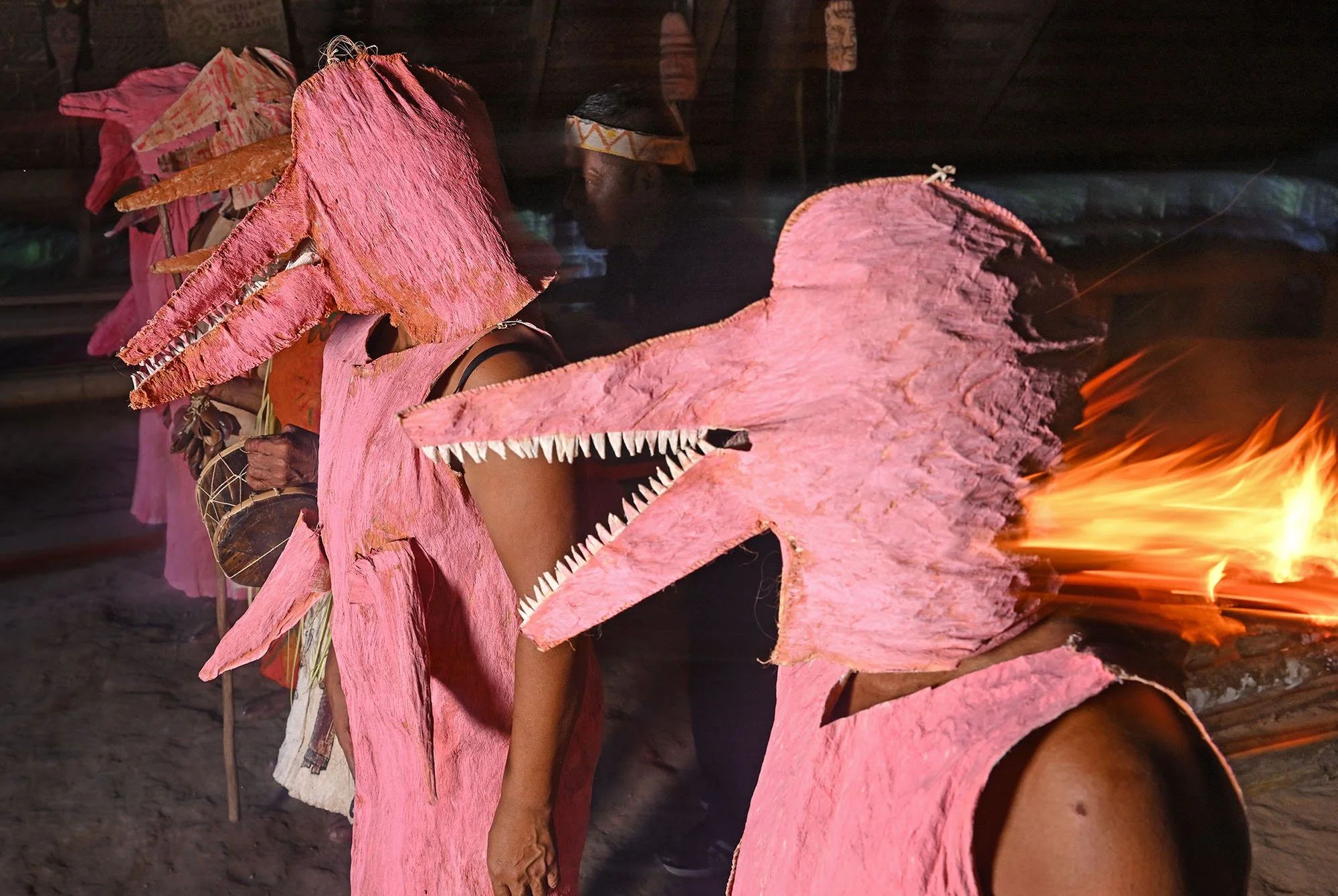
In the lowlands I also spent time with Kayapo communities in Brazil, one of the few communities that will actually go underwater. They catch river turtles by leaping off the bows of boats, and then they grab them underwater. They also dive to move big boulders underwater to open up river passageways for their canoes. The Kayapo were certainly the people who were the most aquatically minded regarding being comfortable underwater and holding their breath. They also harbored a lot of mythology and indigenous knowledge about many of the Amazon river’s fish species and rituals around them.
You need both the Western science and the Indigenous knowledge to make a project like this come together and actually work. It was a great mix – I arrived with all of these scientific papers and left with all of this incredible Indigenous knowledge that these communities were gracious enough to share with me.
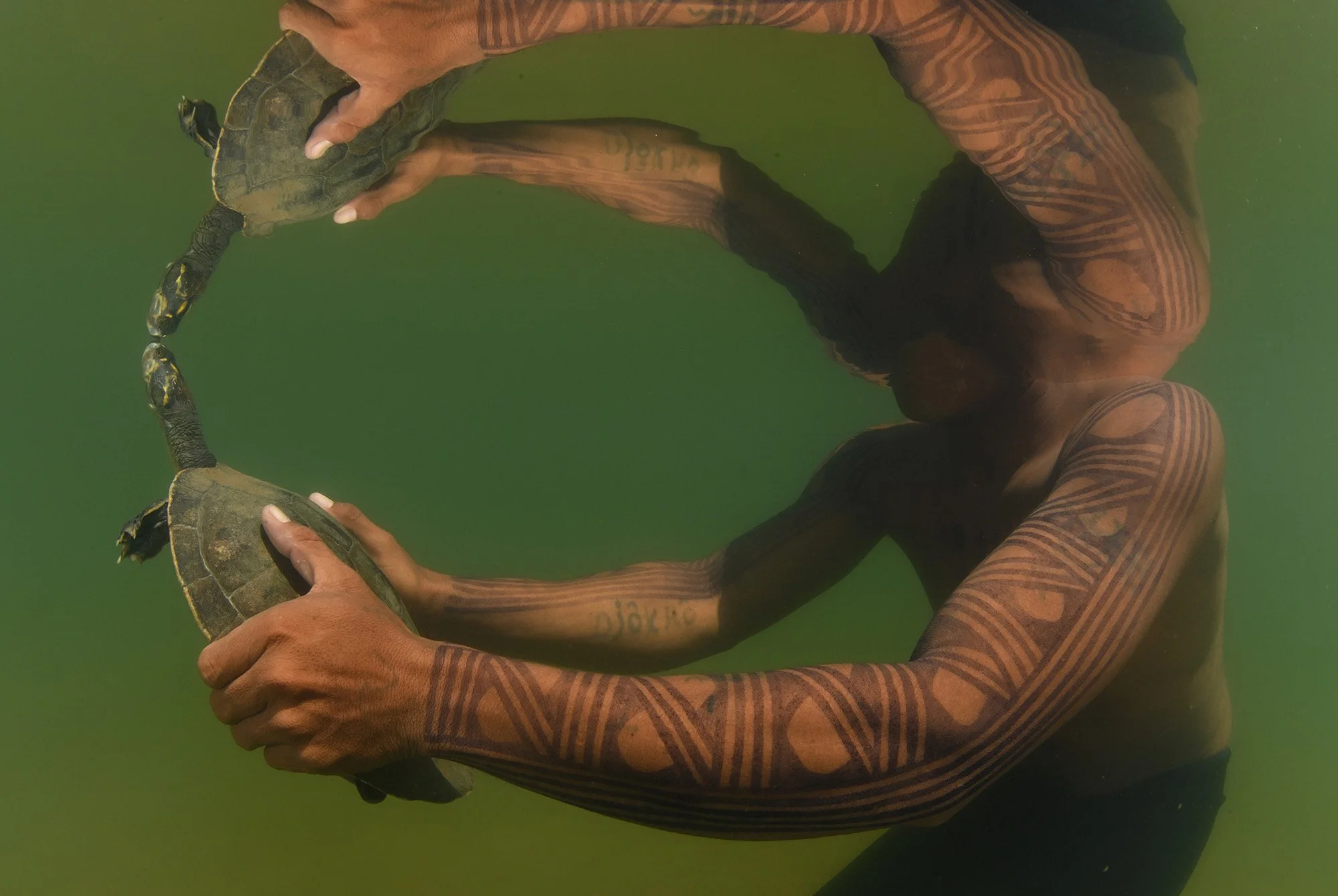
“I arrived with all of these scientific papers and left with all of this incredible Indigenous knowledge that these communities were gracious enough to share with me.”
Thomas Peschak
READ MORE