In Focus: Kali Wexler (PREVIEW)
A self-taught Canadian wildlife conservation and nature photographer, Kali was born and raised on Hornby Island, surrounded by nature and the Salish Sea on all sides. we caught up with him recently to learn more about his work in this incredible part of the world
How did you first get into wildlife photography?
I started with photography from a young age. My mom had a dark room in our house, so film photography was often happening in the background and I was always interested in the creative process. I got my first DSLR camera fresh out of high school and went off traveling, and I basically just documented my travels. So, a lot of surfing and fun party stuff, but also landscapes and nature, and the local people and their cultures – but with no specific focus on wildlife at that point. I just had my surfboard and a couple of cameras in my rucksack and wanted to document it all. I continued to photograph my adventures closer to home: hiking and camping, fishing and exploring the coast by boat. I had some friends who were more focused on wildlife and they said, “Hey, you're going to all these beautiful places, why don't you just point the camera at animals instead?” I hadn't even really thought about it, but I've always been a huge lover of animals, so I started taking photos of whales and bears and the animals that were already around me. One thing led to another: I started focusing on wildlife and sharing my images with local conservation groups, and before I knew it I was doing that nearly full-time.
For people who are thinking about doing the same, is there one game-changing piece of equipment that you need – like a long lens or something?
It very much depends on your subject. Long lenses are very nice but not always necessary – you can have a macro lens and take amazing photos of insects and frogs in your backyard and get some incredible stuff. Then there’s environmental images that basically show an animal in its environment, and those are generally shot with a standard or even wider angle lens – that’s actually some of my favorite photography. Unfortunately it doesn't lend itself to a small screen as well, because let’s face it we all look at an iPhone-size screen these days. So the photos that people tend to gravitate towards are close-up or tight portrait images of wildlife – and for those, yes, you generally need the reach. There’s also many species that cannot be closely approached, like birds or shy or predatory animals that you just need a long lens for. Somewhere in the 400, 600, 800mm range is definitely recommended. As wildlife photographers, we also have to consider ethics. Being an ethical wildlife photographer means you’re maintaining appropriate safe and respectful distances from the animal. We don't want to alter their behavior in any way. That's a really big part of it, and something that needs to be taken seriously by not only professionals, but also hobbyists and beginners too.
How much of what you do is being a photographer, and how much is almost more like being a naturalist?
Early on, the process is very photography-heavy: shooting constantly, learning through repetition. Over time, that flips almost completely. Now, I spend about 90% of my time scouting, researching, studying maps, talking to locals, tracking and being out in the bush waiting for a moment. The actual act of taking photos is a small fraction of the work. You might spend weeks or months preparing for a single moment. The longest I’ve ever waited for an animal was with coastal wolves — about two weeks in a camouflaged blind on the remote outer coast of British Columbia. In the end, the wolf came from behind my blind, lay down next to me in the sand, and went to sleep. I barely got a usable photo, but it was one of the most powerful experiences I’ve ever had in the wild.
I was going to ask you about coastal wolves – since a lot of your work is focused on the fascinating ecosystems in British Columbia where the land and forests meet the islands and ocean.
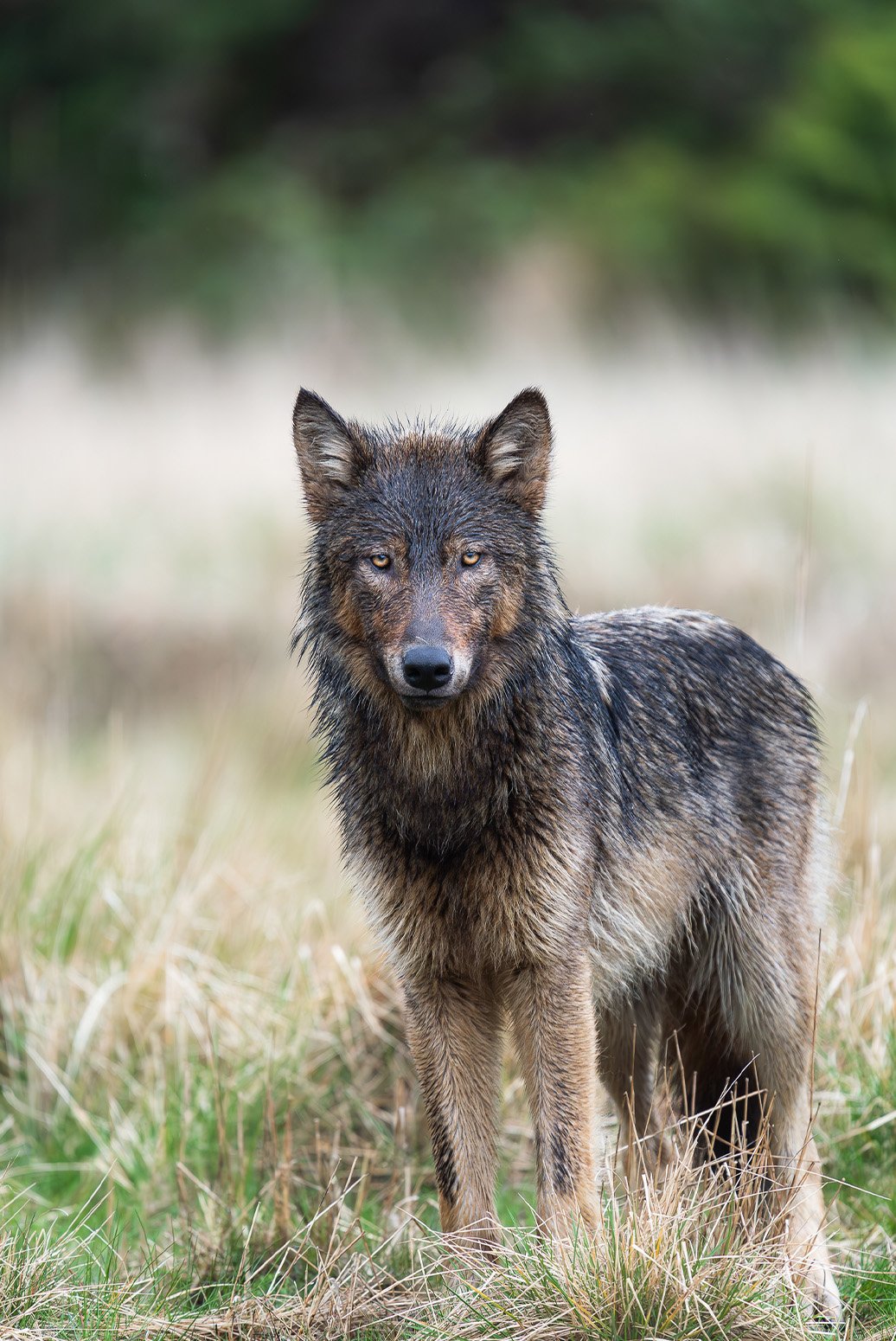
Coastal sea wolves are incredibly intelligent, highly adapted to some of the harshest terrain imaginable, and extremely difficult to photograph. They’re actually a subspecies of the grey wolf, smaller in size – roughly the size of a German shepherd – and uniquely adapted to life between land and sea. Their coats range from tawny brown with red highlights to black, beige, and occasionally even white, and they camouflage beautifully into the rainforest and coastal landscape. They’re exceptional swimmers, regularly traveling miles between islands, with partially webbed paws that help them move through the water. I’ve personally seen them swimming in areas where they would have to cover distances of roughly five miles between islands. Their diet is also amazing: more than 80% comes from the ocean. They dig for clams, forage the intertidal zone, scavenge washed-up carcasses, hunt sea otters, pull salmon from rivers during spawning season and occasionally hunt deer or small mammals. They don’t rely on large ungulates like interior wolves do – the ocean is their lifeline.
Are there any other examples of this ocean/land interface that you’ve shot?
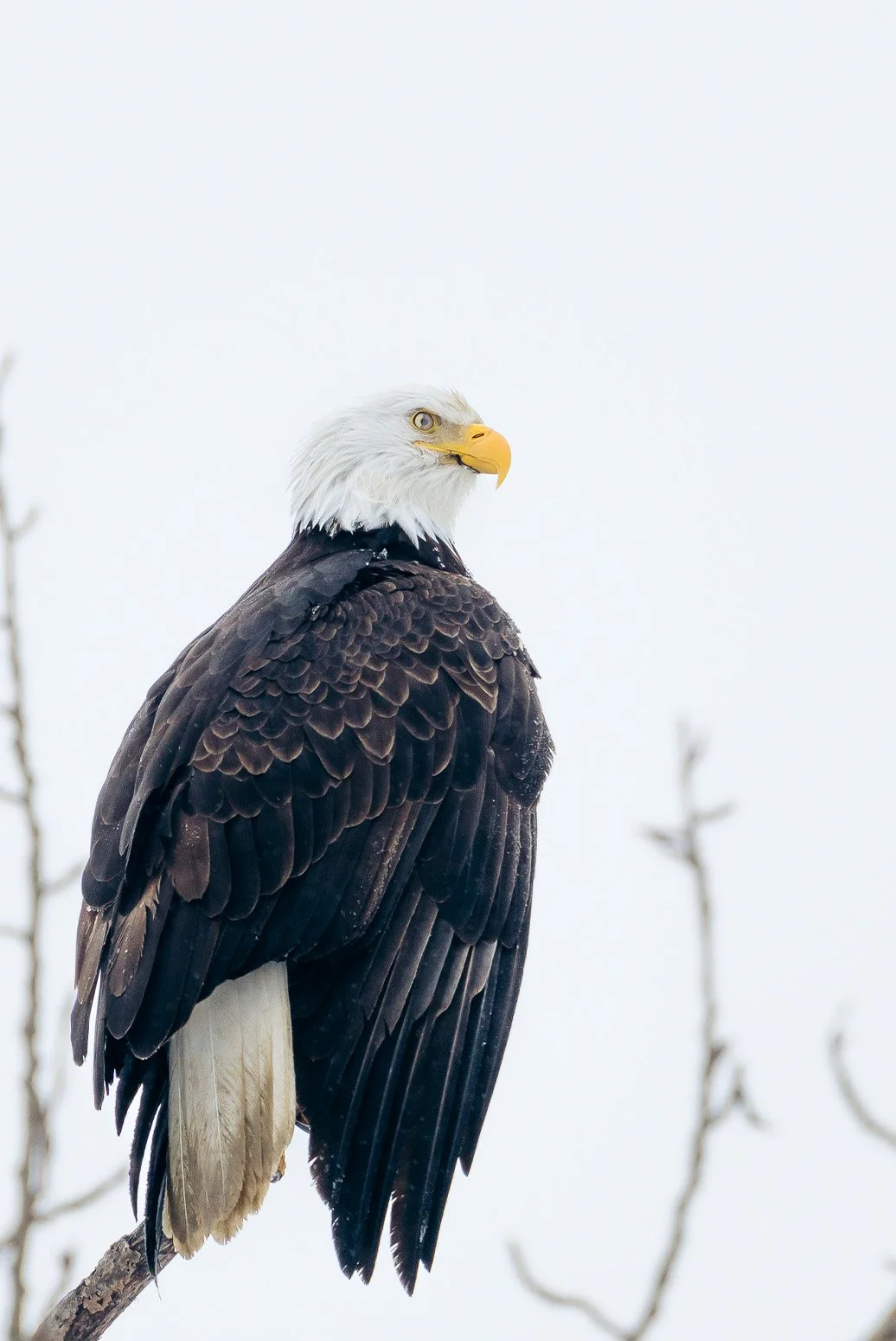
British Columbia’s coast is full of these deep land-sea connections. Salmon, in particular, are a keystone species here. They return to their natal streams to spawn and then die, becoming an essential nutrient source for the entire ecosystem. Bears, wolves, birds and other animals drag salmon carcasses into the forest, where they decompose and act as a powerful fertilizer. Up to 80% of the nitrogen in some coastal rainforests comes from the ocean via salmon. You’ll find salmon remains on logs, in trees and scattered deep into the forest – carried there by eagles and mammals. It’s one of the most powerful examples of how interconnected these ecosystems are.

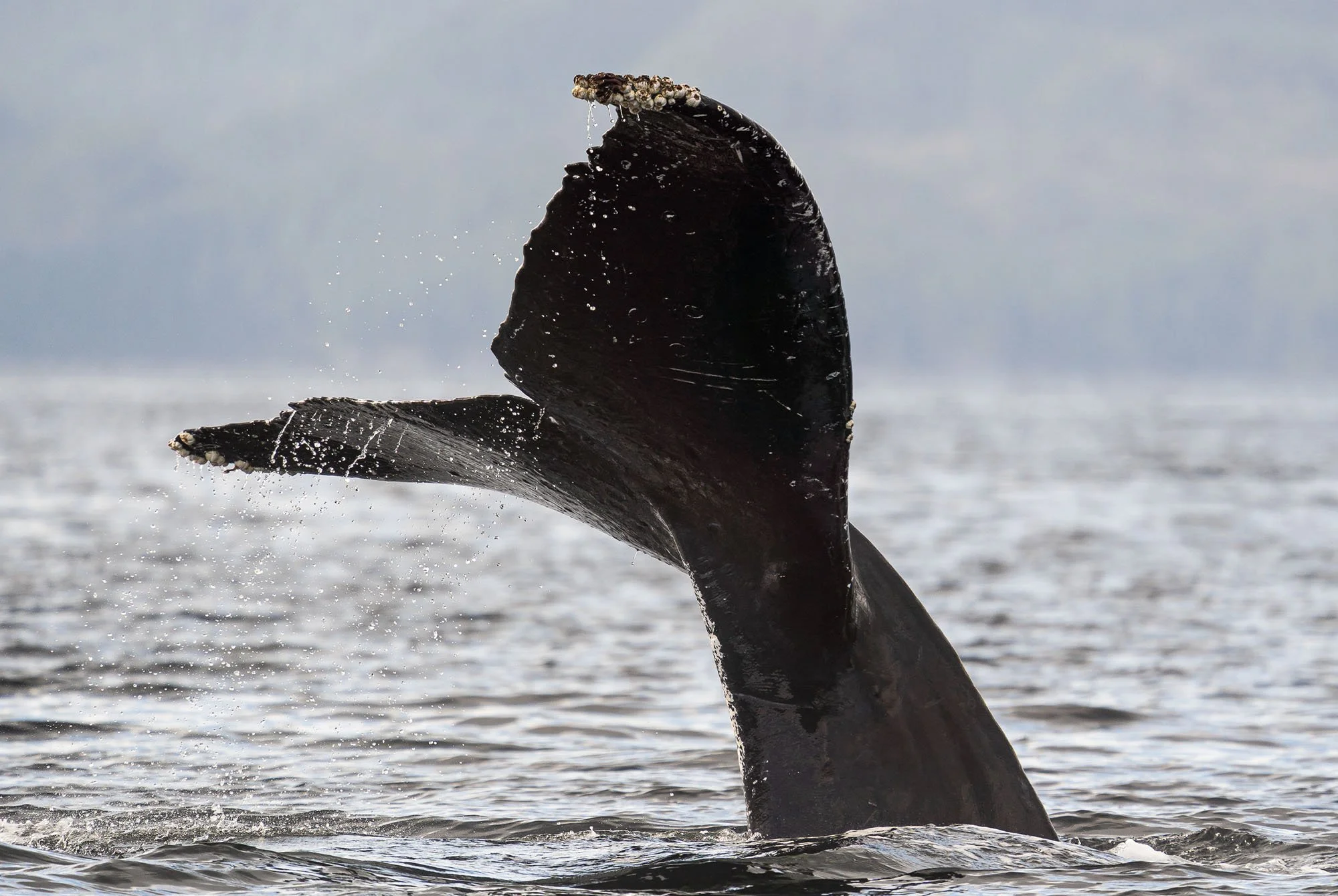
“The actual act of taking photos is a small fraction of the work. You might spend weeks or months preparing for a single moment.”
Kali Wexler
We actually first met on Hornby Island during the annual herring spawn, can you tell our readers what that’s all about?
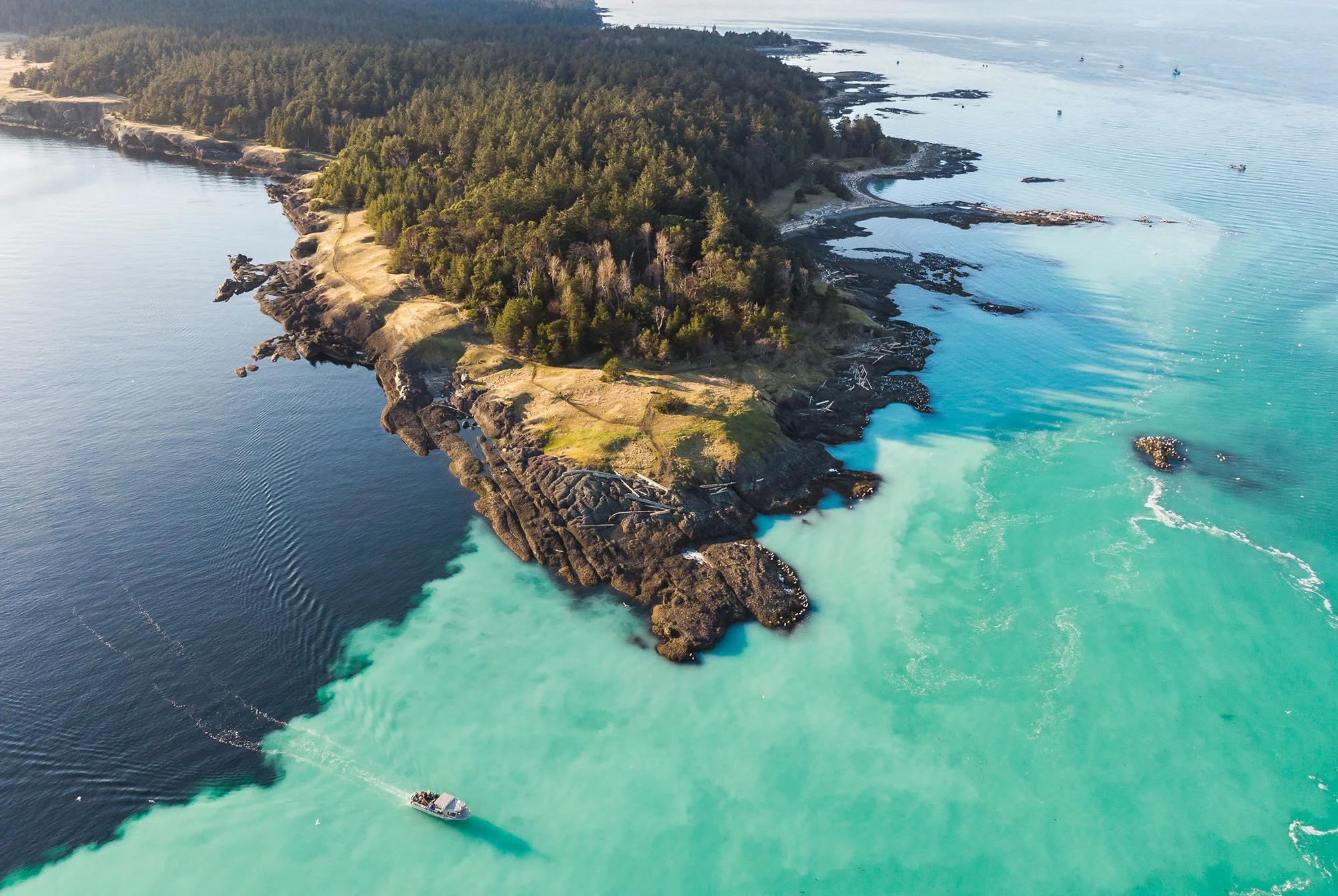
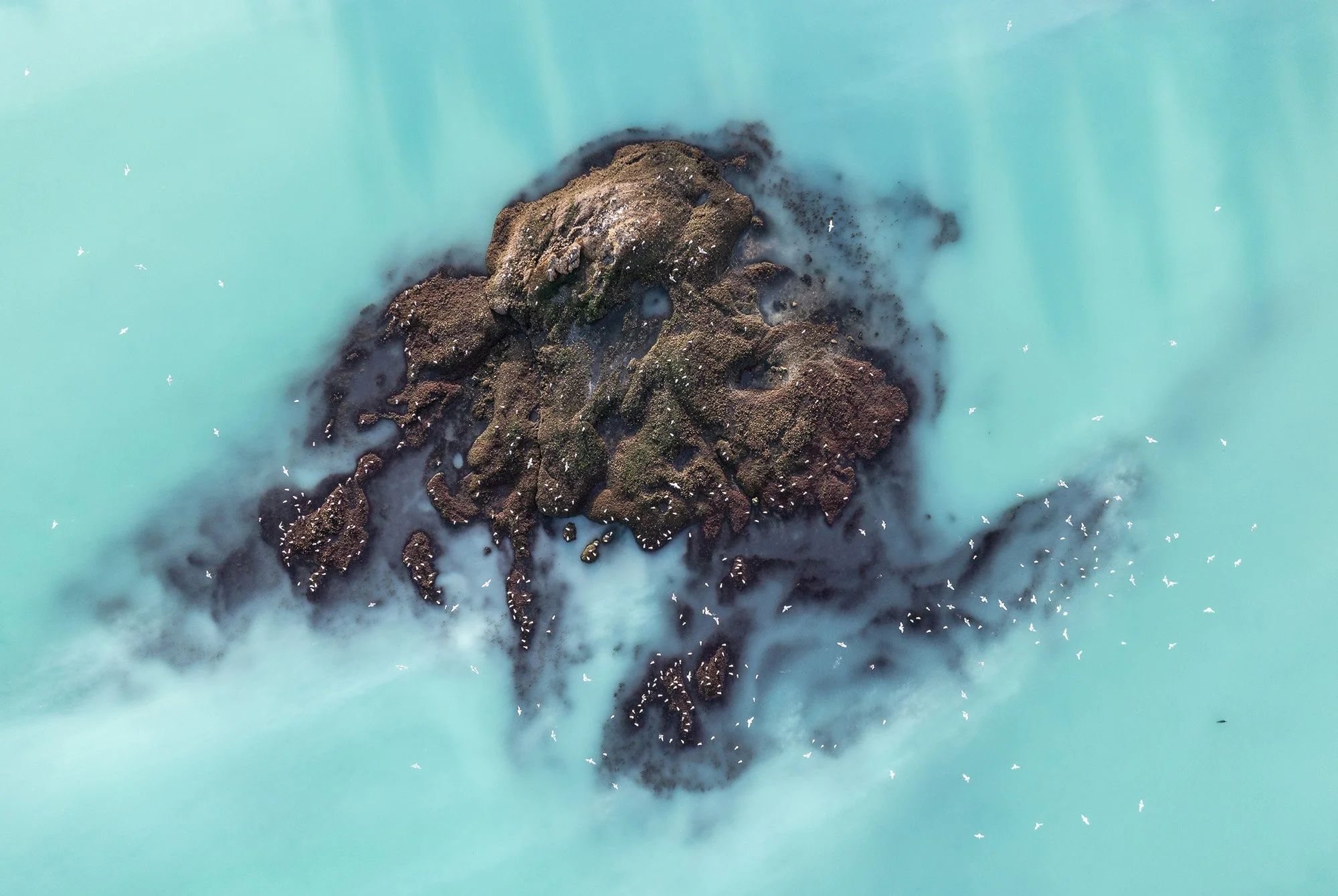
Similar to salmon, Pacific herring play a foundational role as a keystone species in the coastal ecosystem. Herring are small forage fish, similar to anchovies and sardines – they’re pretty small. Most people don't really think about them as being important, but they’re crucial for the wider marine ecosystem and are a vital food source for Chinook and Coho salmon. On Hornby Island and nearby Denman Island, the annual spring herring spawn usually happens early to mid March. Female herring deposit their eggs on intertidal and nearshore vegetation like eelgrass, seaweed and rocky substrates. When the males release milt, the water turns a brilliant aquamarine color. It’s an incredible sight. The spawn brings an explosion of life to the area: birds, sea lions, whales and tons of other species feeding on both the fish and the eggs.
Our community on Hornby Island celebrates this time of year with the annual Herring Festival, we have art shows, film nights, boat tours and a big community dance called the “Herring Ball”. All proceeds go toward conservation through Conservancy Hornby Island. I’ve spent nearly a decade documenting herring to raise awareness about their importance and to advocate for a moratorium on the commercial fishery. The herring spawn in the Strait of Georgia is currently considered the last viable commercial herring fishery on the coast of BC. The other (4 of 5) herring stocks have unfortunately closed from fisheries mismanagement resulting in population decline.
Sadly, herring stocks are consistently overestimated, leading to continued overharvest. A multi-year moratorium would give fish populations the chance to rebound, as we’ve already seen in areas where fishing has stopped. I’m actually currently working on a feature story for Canadian Geographic focused on herring returning to Howe Sound, highlighting a small but meaningful success story driven in part by the Squamish Nation. Herring aren’t just ecologically vital: they’re culturally significant to First Nations along the coast and have been for thousands of years.
What are some other special places you’ve gotten to explore via your work?
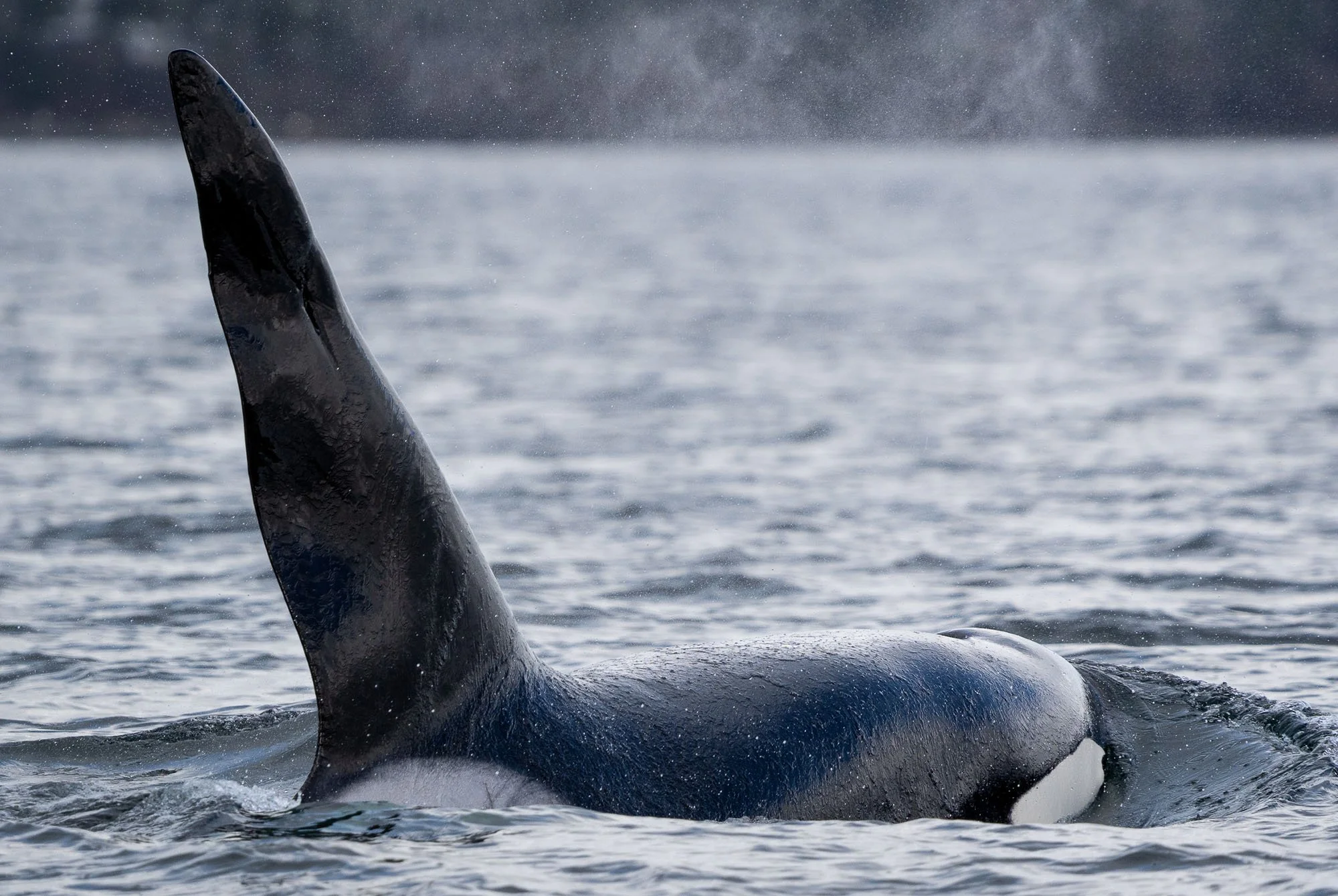
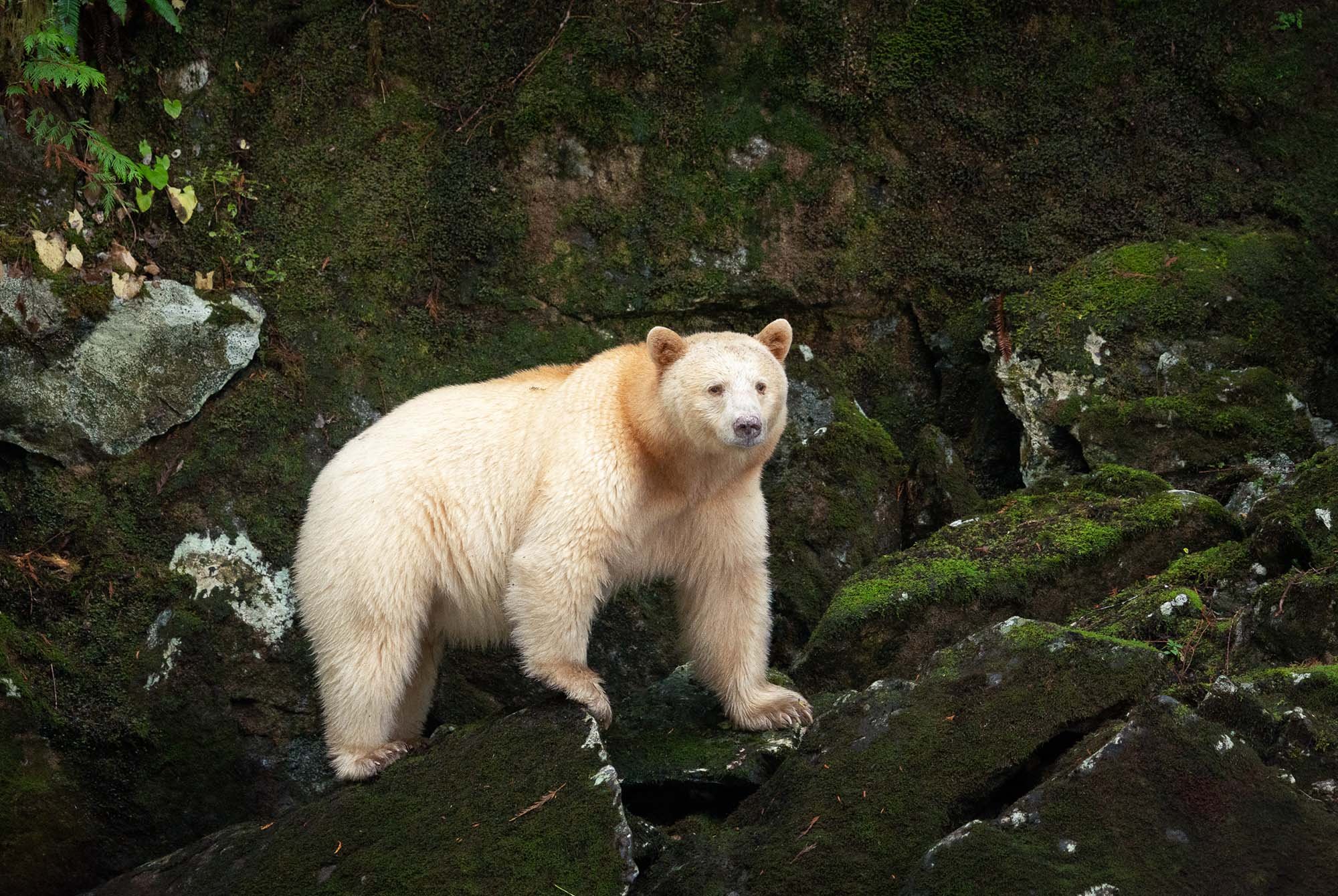
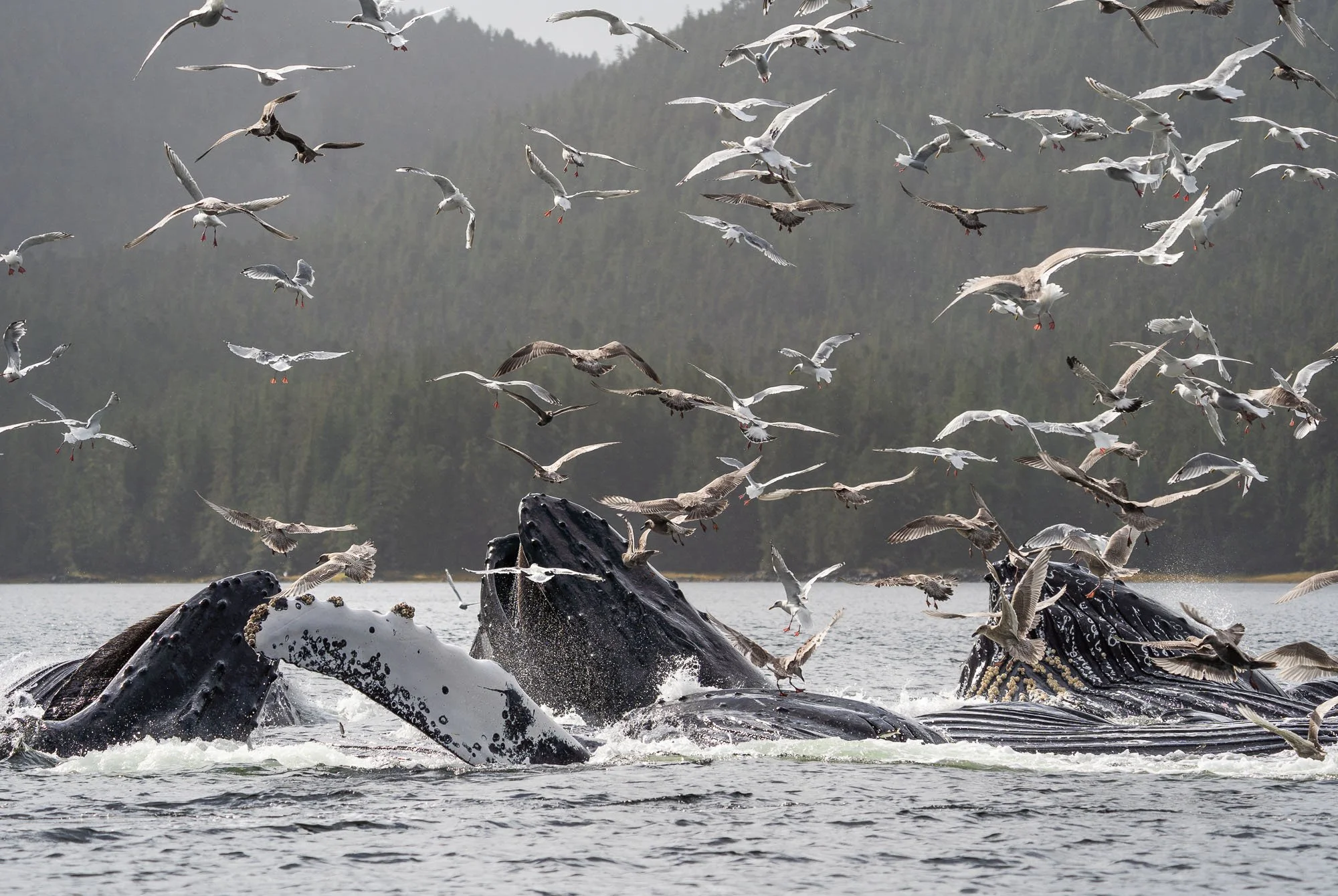
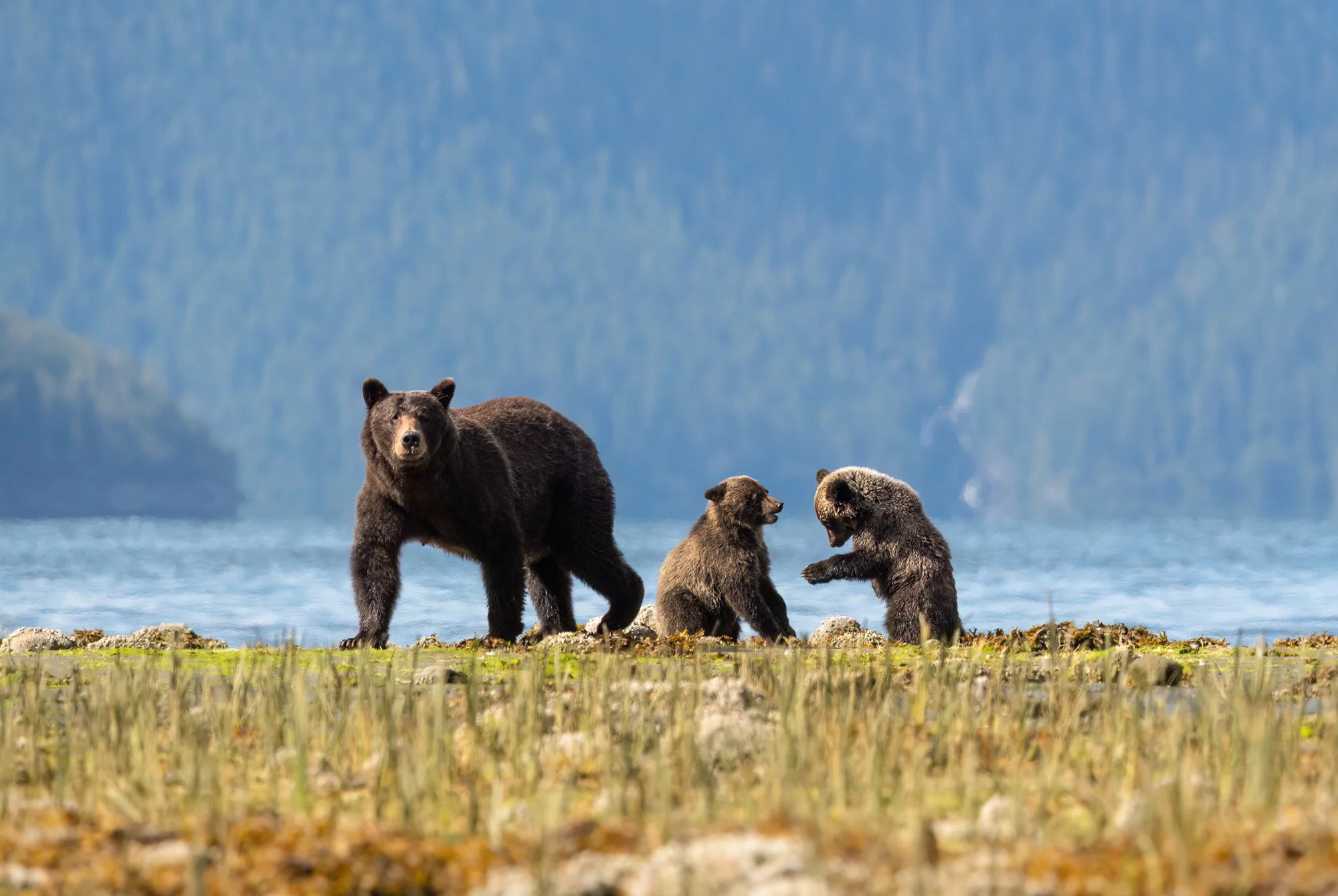
Although I’ve been lucky to visit many amazing places, a major highlight of my career has been working in the Great Bear Rainforest, the largest intact temperate rainforest in the world. Stretching from the northern tip of Vancouver Island to Alaska, it’s a vast, remote region accessible mostly by boat or floatplane. I’ve spent five seasons there, guiding and photographing during the fall salmon runs. That’s when everything comes alive: spirit bears, grizzlies, black bears, coastal wolves, humpback whales bubble-net feeding, orcas passing through, sea lions, sea otters — it’s one of the most biodiverse places on Earth. The First Nations that call the Great Bear Rainforest home are exemplary stewards, and I believe we could all learn something from the way they approach conservation, management and respect for the environment. Everything I do now sits at the intersection of storytelling, conservation and respect for the natural world. The goal is simple: help people see how deeply connected everything is — because once you understand that, it’s hard not to care.
READ MORE